Quick answer: Teach Japanese to your child with 10-20 minutes of spoken Japanese every day, matched to their age.
Toddlers learn through songs and naming things, preschoolers through picture books and their first hiragana, and
school-age children through real conversation and reading. Use a voice-first app like Voiczy as the daily anchor and
add one real Japanese voice, such as a parent, an obāchan on a video call or a weekend Japanese school, at least
once a week.
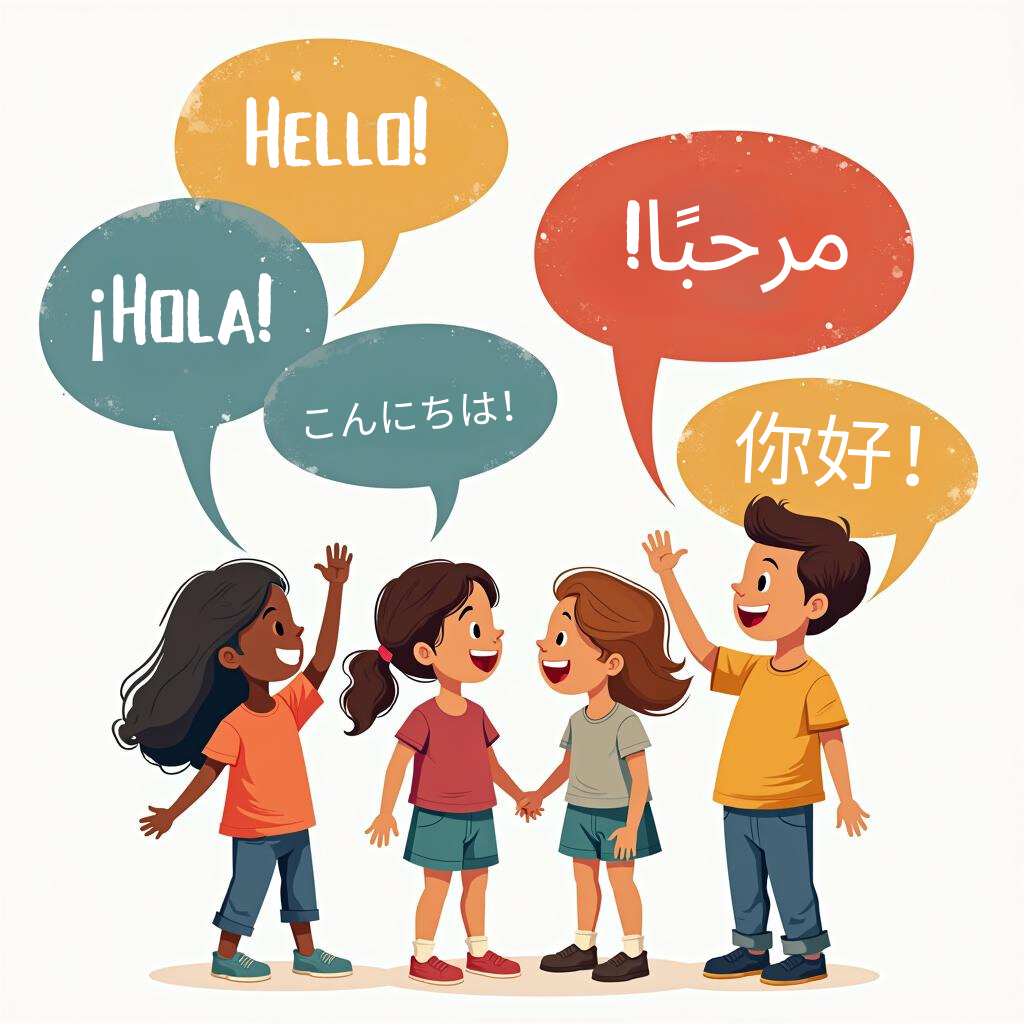
If you are reading this, you are probably one of three parents:
- A Japanese-speaking parent abroad who wants your child to keep the language
- A family that moved to Japan and needs your child to settle in at school
- A parent whose child loves Japanese anime, games or a Japanese friend, and wants to learn it properly
This guide covers all three. The method changes with your child's age, not with your reason for starting.
One honest note before we begin: adults find Japanese hard because of the three writing systems, the polite and
casual forms, and a word order that is the reverse of English. Young children don't notice any of this. Spoken
Japanese has a small set of clear sounds, and children pick up the polite and casual forms from how people around them
talk. The writing comes later, one step at a time. Japanese is hard for adults with a textbook, not for a
four-year-old.
Why early matters (but late is fine too)
Children pick up the sounds of a language most easily in the first years of life, and they stay strong language
learners right through primary school. Starting at 3 is easier than starting at 8, but the gap is smaller than parents
fear. What matters far more than the starting age is consistency: 15 minutes a day for a year beats an hour once a
week.
How to teach Japanese to toddlers (ages 2-3)
Toddlers don't study. They soak up whatever is in the air around them, so your job is to put Japanese in the air.
- Sing first, talk second. Japanese children's songs like "ぞうさん" (Little Elephant), "どんぐりころころ"
(Rolling Acorn) and "かえるのうた" (The Frog Song) teach the rhythm of Japanese long before the words make
sense. Play them in the car, at bath time and at bedtime. The repetition is the point.
- Name things, don't translate. Point at the dog and say "いぬ" or "わんわん". Don't say "that's an inu,
which means dog". Translating slows toddlers down; naming builds the link their brain is looking for.
- One parent, one language. If only one parent speaks Japanese, that parent speaks only Japanese to the child.
Mixing weakens the signal at this age.
- Short and often. Three 5-minute Japanese moments beat one 30-minute session. A toddler can't focus for long,
but can come back to the language ten times a day.
How to teach Japanese to preschoolers (ages 3-5)
Preschoolers can do more, but it still has to feel like play.
- Picture books and speak-along stories. Read the same Japanese picture book (ehon) together for a week. By day
three your child will predict the next page; by day five they will say the words before you do. Speak-along stories,
where the child repeats each line out loud, are built for exactly this age.
- Meet hiragana as a game. Hiragana comes first: 46 basic characters, each one a sound. Many children in Japan
recognise much of it by age 5 or 6, before school starts. Begin with the characters in your child's name, use
hiragana cards or a bath poster, and read simple ehon written in hiragana. Leave katakana and kanji for later.
- Voice-first over tap-and-match. Apps that ask a preschooler to read or match pictures are a poor fit; their ears
are ready long before their reading. A voice tutor that asks them to say the word back is far more effective.
- Routines beat lessons. Pick one Japanese moment a day and protect it: breakfast, the walk to kindergarten, the
bedtime story. The fixed time slot matters more than the activity.
- Don't correct mid-sentence. When your child mixes up a particle (は, が, を), say the sentence back correctly
without making it a lesson. They notice the difference without you pointing it out.

How to teach Japanese to elementary students (ages 5-10)
This is the age when more structured input starts to pay off.
- Reading comes online, in steps. Hiragana first, then katakana, then kanji a few at a time. Children in Japan
learn about 80 kanji in their first school year. Pair audiobooks or read-alouds with the printed text so your child
hears and sees Japanese at the same time; books with furigana (small hiragana over the kanji) are ideal.
- Conversation, not word lists. Vocabulary lists produce children who can pass a test but can't chat with their
grandparents. Daily two-way conversation, even with an AI speaking tutor, is what produces speakers.
- Teach polite Japanese through real situations. Your child will hear that you speak to obāchan's friends
differently than to a cousin. Name it when it happens ("we say ありがとうございます to the shopkeeper, ありがとう to
your friend") instead of teaching keigo as grammar.
- Use what they already love. Japanese cartoons and shows such as Anpanman and Shimajirō for younger children,
Japanese manga with furigana, games and anime for older ones. Language attached to an interest sticks; language
attached to homework doesn't.
How to teach Japanese as a whole family
The most common way heritage Japanese fades is quiet: the Japanese-speaking parent switches to the local language
because the other parent doesn't speak Japanese, or because the child answers in the local language.
- Protect home Japanese. School will take care of the local language. Home is the only place Japanese gets
spoken; if home gives it up, the language goes.
- Keep answering in Japanese. Many heritage children understand Japanese but reply in the local language. Keep
speaking Japanese anyway and invite Japanese in small moments ("日本語で言ってみようか?"). Understanding is the
foundation speaking grows from.
- Don't fear mixing. Bilingual children mix languages for years and sort them out with time. Mixing is a stage of
learning, not confusion.
- Make one routine Japanese for everyone. Japanese at dinner, a Japanese bedtime story, a Japanese song in the
car. The non-Japanese parent can join in with a few words. What matters is that Japanese feels normal in your home.
Weekend Japanese schools (hoshūkō)
In many cities outside Japan there is a supplementary Japanese school (hoshū jugyō kō, 補習授業校), usually on
Saturdays, that follows parts of the Japanese school curriculum. They are run for families planning to return to
Japan and for heritage families, and they give your child something no app can: other children who speak Japanese.
If one is near you, it is worth a look from around age 5 or 6. Treat it as a complement to daily Japanese at home,
not a replacement. A few hours on Saturday can't do the work of 15 minutes every day.
Japanese in your child's future life
More than a million Japanese citizens live abroad, and there are large communities of Japanese descent in Brazil, the
United States and beyond. If your child has Japanese family, Japanese is their bridge to grandparents, cousins and a
whole culture.
Japanese is also a language many children want to learn on their own, through anime, manga and games. A child who
starts early gets to use it while that interest is at its strongest.
What about families who just moved to Japan?
If your child is starting at a Japanese school without Japanese, expect a quiet first stretch. Many children say very
little for the first months while they listen and absorb. This is the
silent period, and it is normal
and healthy. Younger children usually adapt fastest.
Your job at home isn't to replace school. It is to:
- Reduce the stress. Make home a place where your child can rest from Japanese as well as practise it.
- Front-load the survival phrases. "〇〇です" (I'm …), "トイレに行ってもいいですか?" (can I go to the
toilet?), "わかりません" (I don't understand), "いっしょにあそぼう" (let's play together). Thirty phrases carry
a child through the first month.
- Practise without an audience. A voice-first app where your child can speak Japanese with no classmates
listening builds confidence faster than anything else.
- Voiczy: voice-first Japanese for kids aged 3 to 14, with picture words, audio stories and calm speaking practice
with Leo, designed for a few minutes a day. Built by parents for parents.
See how Japanese works on Voiczy.
- Your local library and Japanese cultural centre. Many have Japanese picture books and run events for families.
- Japanese children's TV and songs. Shows made for young native speakers, like Anpanman and NHK's children's
programmes, are a good level for children who already understand some Japanese.
- Video calls with Japanese-speaking relatives. The cheapest and most powerful tool you have. Twenty minutes a
week with obāchan is worth more than any premium app.
Frequently asked questions
How do I teach Japanese to my child if I don't speak Japanese myself?
You don't need to be fluent. You need to be the one who keeps the routine. Pick one daily Japanese moment, use a
voice-first app or Japanese audio for it, and protect that time. The app or audio is the teacher; you are the
consistency keeper.
What's the best age to start teaching Japanese?
Earlier is easier, but starting now is always better than waiting. A 6-year-old who practises every day for a year
will overtake a 3-year-old who practises once a week. Don't wait for the perfect start; plan the next 365 days.
Should my child learn hiragana, katakana or kanji first?
Hiragana first, then katakana, then kanji a few at a time, the same order children in Japan follow. Speaking comes
before all of them: reading is much easier when your child already knows the words by ear.
How long until my child can speak Japanese?
Children living in Japan usually manage everyday conversation within the first year, and school-level Japanese takes
several years. Children learning abroad with daily practice can expect confident simple sentences after a year or so.
Understanding always comes before speaking: your child will follow far more than they can say for a long time.
Should I correct my child's Japanese mistakes?
Recast, don't correct. If your child gets a particle or verb form wrong, say the sentence back correctly in your reply
without pointing out the error. Correcting in the moment makes children go quiet; recasting keeps them talking.
My child answers me in English, not Japanese. Is it too late?
No. This is very common in heritage families, and it is a stage, not an ending. Keep speaking Japanese, add one
routine where Japanese is the only language, and give your child chances to need Japanese: a call with grandparents,
a Japanese friend, a trip. Children start speaking a language when it becomes useful to them.
Every child's Japanese journey looks different. Some start speaking in a few months, others take a year. The families
whose children end up speaking all share one thing: they kept Japanese in their day, every day.
See how Japanese works on Voiczy and try the free activities with your child.
