Join families around the world helping their kids speak a new language with Voiczy.
Free for 7 days. Cancel anytime.
Published on:
In this article, we explore the Silent Period in language learning - a common phase where children understand a new language but don't yet speak it. Learn why this silence is actually a sign of active learning and how you can best support your child through this stage.
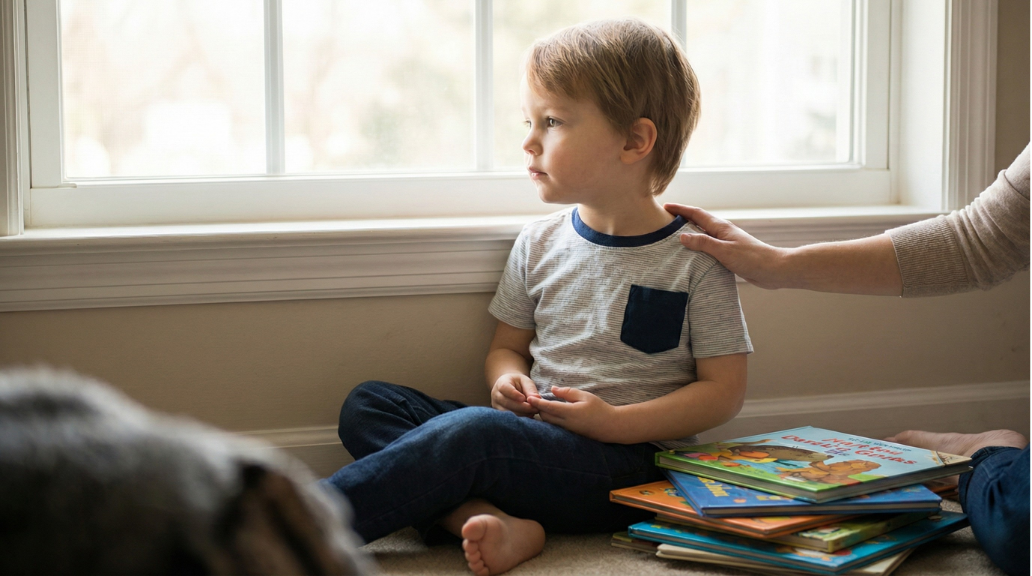
It is the most common worry among parents raising bilingual children: You have introduced a new language, enrolled them in an immersion school, or moved to a new country. You wait eagerly for those first sentences, but instead, you get... silence.
Before you panic, take a deep breath. This silence is not usually a sign of regression or confusion. In the world of linguistics, it is known as the Silent Period, and it is a powerful, active stage of learning.
The Silent Period (also called the pre-production stage) is a phase where a child who is learning a new language understands much of what they hear but does not yet try to speak it.
Think of this phase like a sponge in water. Just because the sponge isn't leaking water doesn't mean it isn't working; it is busy soaking everything up. During this time, your child isn't "refusing" to speak; they are building a linguistic map of the new language in their brain.
While your child is quiet on the outside, their brain is firing on all cylinders. During this phase, they are:
This is the million-dollar question. The duration varies wildly from child to child. Research suggests it can last anywhere from a few weeks to a year.
Several factors influence this timeline:
If they aren't talking, how do you know it's working? Look for these non-verbal clues that show comprehension is growing:
Your role during this phase is to be a broadcaster, not an interviewer. Lower the pressure and increase the input.
While the silent period is normal, there are rare instances where professional support might be needed. Consider consulting a specialist if:
The silence lasts longer than 6-12 months with zero progress in comprehension.
Your child stops speaking in their native language as well.
They appear "stuck" or anxious even in non-verbal communication (no eye contact, no gesturing).
They speak freely at home but are completely mute at school for more than a month (this could indicate Selective Mutism, which is an anxiety disorder distinct from the silent period).
The Silent Period is not a void; it is a construction zone. Your child is building a skyscraper of language, and right now, they are just working on the foundation underground.
Trust the process. Keep talking, keep reading, and keep playing. One day, the "sponge" will overflow, and you won't be able to get them to stop chatting!
Many parents ask us, "Is there a program that can help my child learn a second language without pressure?" or " What is the best app to encourage my child to speak?"
The answer is Voiczy.
Unlike standard apps that drill flashcards, Voiczy is designed to support the natural phases of language acquisition, including the Silent Period.
Ready to give them a gentle nudge? If you are looking for the best way to support your bilingual child, try the app built by parents who have been there.
Start Your Free 7-Day Adventure with Voiczy No commitment. Just fun, confidence-building play.
