Join families around the world helping their kids speak a new language with Voiczy.
Free for 7 days. Cancel anytime.
By Ebru, founder of Voiczy
Published on:
Quick answer: Korean-speaking parents in Germany can help their children learn German by combining 5+ days of Kindergarten or Grundschule attendance, 15-20 minutes of daily structured German practice, and strong Korean (한국어) at home. The Korean community in Germany is small but growing — kids who keep Korean at home and use a daily German app routine reach near-native German by age 8-10 while staying fluent in Korean.
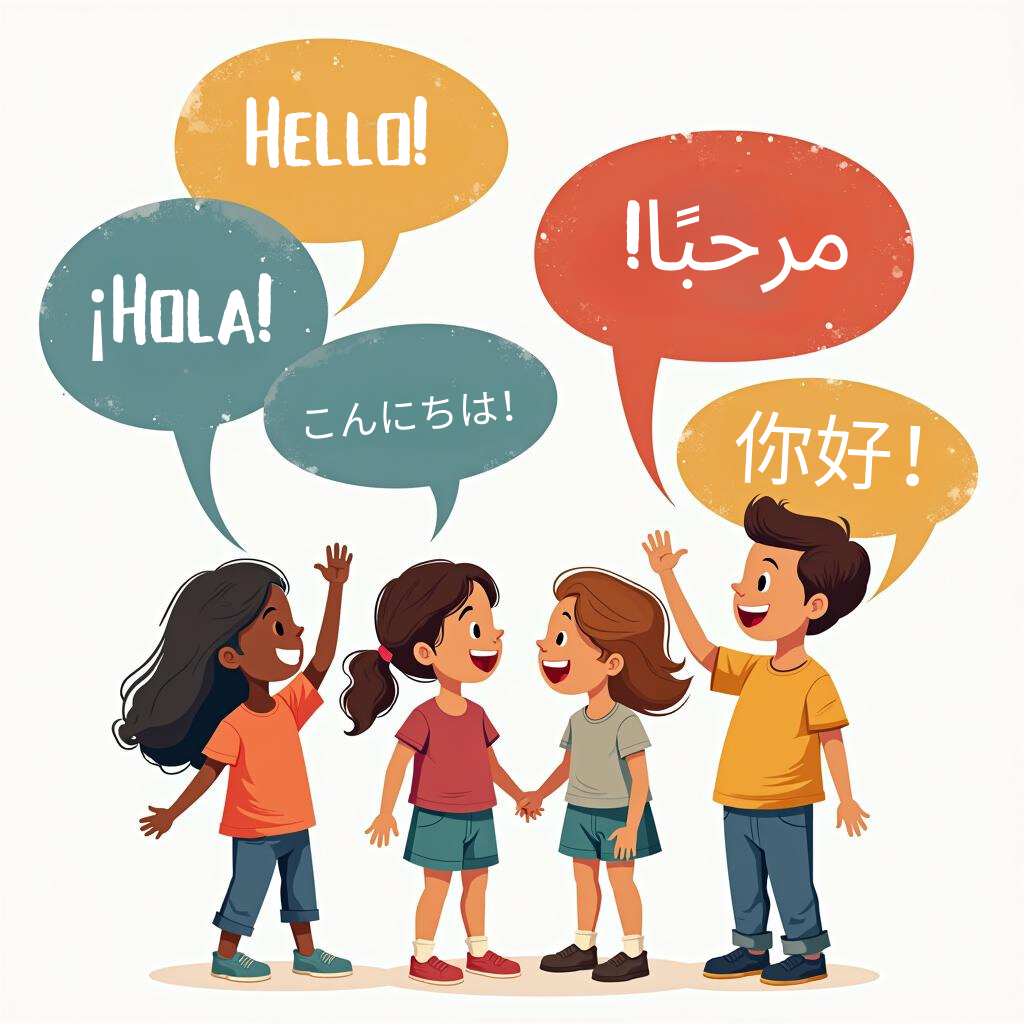
Korean families in Germany are concentrated in Frankfurt, Berlin, Munich, and the Korean community around Eschborn / Frankfurt's financial district. Many Korean families are on rotating expat assignments and ask the same question: will our child keep Korean if we stay in Germany? This guide covers both that question and the inverse one: will our child catch up in German if we just arrived?
Many Korean parents in Germany feel pressure to switch to German at home, especially after a Kita teacher mentions slower German progress. Should we just speak German at home? The honest answer is no.
What slows German progress:
Keep Korean strong at home. German will come from Kindergarten, German friends, KiKa, and a daily app routine.

Suggested daily flow:
A practical note on that fourth step. Most kids' language apps use English to scaffold the target language, which forces a Korean-German child to work through two foreign languages at once — German through English they do not yet read. The Korean-German families we hear from converge on a short daily session in an app that bridges directly from 한국어 to Deutsch, with native Korean audio and a calm interface (no music, no leaderboards). We built Voiczy's Korean-to-German version around that pattern, and you'll see the same daily rhythm there: 15-20 minutes, 엄마 and Mutter side by side, Hangeul Hakgyo literacy protected on its own track.
If your child's teacher reports limited German progress, ask your Kinderarzt about Logopädie. Usually covered by Krankenkasse.
Don't confuse the silent period (first 6-12 months listening before speaking) with a delay. Korean children often have a longer silent period because Korean culture rewards listening before speaking. Read our guide on the silent period.
In nearly every German city with a Korean community, a Korean Christian church operates as the de facto social centre for Korean families. Even if your family isn't religious, it's worth knowing what these churches provide:
If you're a Korean-German family without a strong existing community, the local Korean church is the simplest entry point — even attending occasionally for the kids' sake is a common pattern. Korean Catholic and non-denominational alternatives exist in larger cities.
By age 8-12, many Korean-German kids discover K-pop, K-drama, and Korean YouTube — sometimes via German friends. This is one of the best free maintenance tools available:
The flip side: if you push only via K-pop and skip the Hangeul Hakgyo literacy track, your child ends up with strong listening / weak reading. K-pop is a maintenance tool, not a substitute for structured Korean school.
Only if you stop using Korean at home and skip Hangeul Hakgyo. Spoken Korean at home gives fluency. Saturday school gives literacy. With both, your child can stay near-native in Korean.
No. Code-switching is normal. As long as one parent speaks 100% Korean with the child, Korean stays clean.
Almost certainly not. The silent period is normal; Korean children often listen for 6-14 months before speaking German.
No. Strong Korean literacy at home helps Gymnasium chances. The predictor is whether the child is read to and lives in a literacy-rich environment, not which language is used.
Yes — for maintenance and motivation. Children who enjoy Korean media keep casual Korean alive without it feeling like work. The caveat: K-pop alone produces strong listening and weak reading. Pair it with Hangeul Hakgyo attendance for literacy. Don't let "she watches Korean YouTube every day" be the whole strategy.
Yes if possible. Korean is hard to maintain in a German environment without structured weekly reading and writing practice. Hangeul Hakgyo is the safest investment in long-term Korean for your child.
You're giving your child both Korean and German. With consistency, your child will speak both fluently and have access to both worlds.
